
You’re posting on LinkedIn. People are liking your content. Your connections are growing.
But when you look at the enquiries coming into your business, it’s a different story.
It’s frustrating to put time into creating content and still struggle to see how that effort contributes to sales.
Before you commit to posting more often, ask yourself this:
If the right person landed on your LinkedIn profile today, would they understand what they could buy from you, why it matters and how to get started?
That’s the connection I want business owners to think about when they use LinkedIn.
Attention creates an opportunity. Your offer, messaging and customer experience help you do something with it.
Here are four steps to build that connection.
1. Define your offer: what can people buy from you?
You can share useful advice every week and still leave people unsure about what your business actually sells.
Perhaps your posts cover lots of different topics. Perhaps you talk about your industry but rarely explain your services. Or perhaps your offer makes sense to you because you work with it every day, but a potential customer needs more explanation.
Start by putting one offer into a clear sentence:
I help [specific customer] with [specific problem] through [product or service].
For example, “I offer business support” leaves a lot for the reader to work out.
“I manage invoicing and payment reminders for small consultancy businesses” gives them something concrete to recognise.
They can immediately consider whether that’s something they need.
Before planning your next LinkedIn post, write down:
- Who the offer is for.
- What problem it helps them solve.
- What they receive.
- How they can buy it or enquire.
You don’t have to squeeze all of this into every post. But it should be easy to find when someone explores your profile or website.
Your action: Read your LinkedIn headline and About section as if you’ve never heard of your business. Is your offer clear without needing further explanation?
2. Make the value clear: why should they buy it?
Explaining what you do is the starting point. You also need to help someone understand why it would be valuable to them.
A list of deliverables describes the work. Your content needs to connect that work to the customer’s situation.
Take the invoicing example.
“Monthly invoice management” tells someone what’s included.
“Keep invoicing organised without spending your Friday afternoon chasing paperwork” gives that service a place in their working life.
The value becomes easier to understand because it relates to a problem they recognise.
For your own offer, think about:
- What is difficult or frustrating for the customer right now?
- What are they trying to achieve?
- How does your service help?
- What evidence can you show?
That evidence could be a client testimonial, an example of your work or a case study explaining the starting point, your approach and the outcome.
Use results you can substantiate. Where you don’t have a case study, explain your thinking and show how you approach a relevant problem.
For example, a LinkedIn strategist could walk through an example of an unclear profile and explain how they would improve its messaging. That gives a potential client a way to understand the work before enquiring.
Your action: Choose one feature of your service and finish this sentence: “This helps my customer because…”
Use that answer as the starting point for a post.
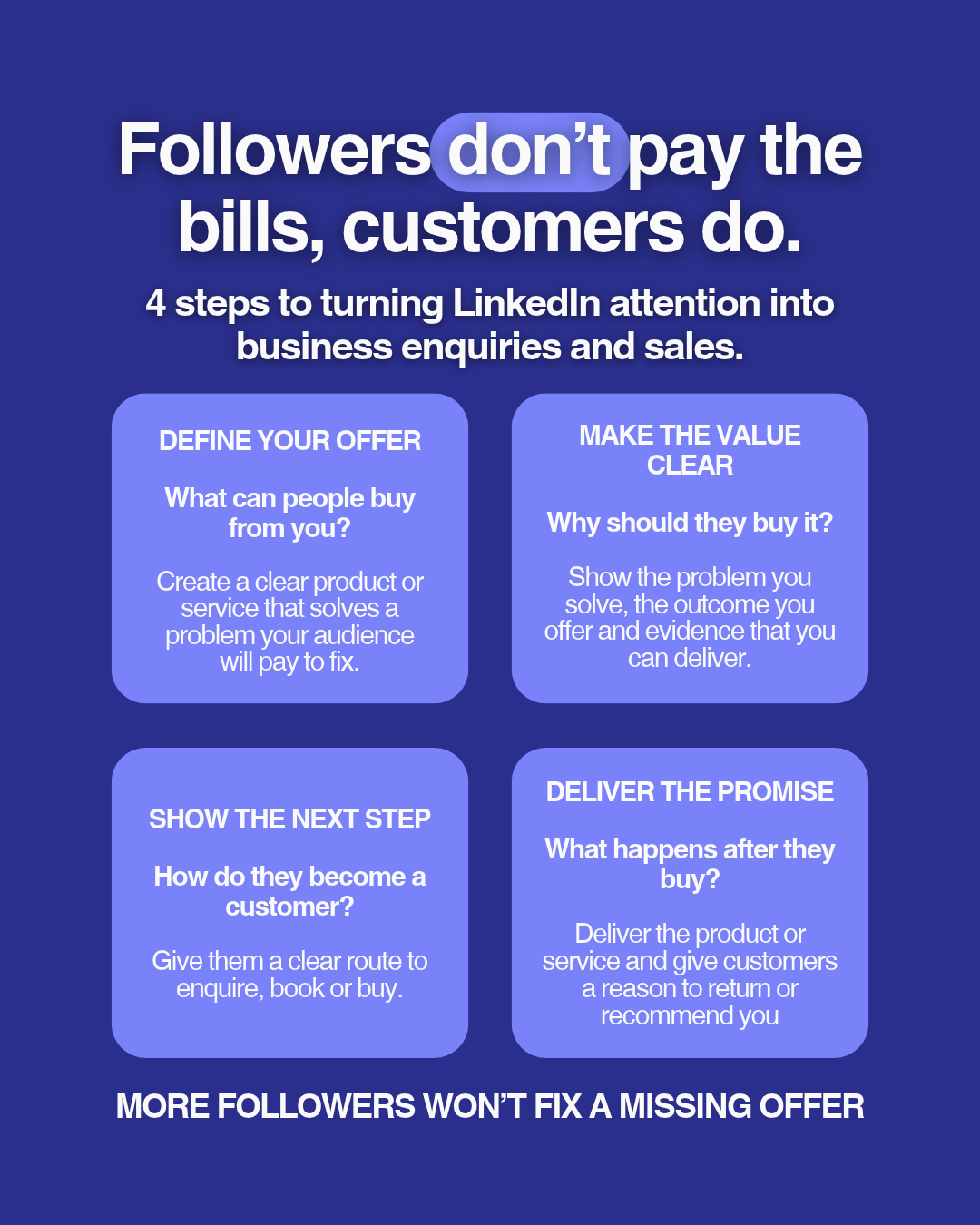
3. Show the next step: how do they become a customer?
Someone has read your post. They recognise the problem. They’re interested in your approach.
What happens next?
Look at the route you’re asking them to take. Can they find your service details? Does the link take them to the right page? Do they know what will happen when they enquire?
Your LinkedIn content, profile and website should help someone move through those questions.
For example:
Post: Explains a problem your potential client recognises.
Profile: Makes your expertise and relevant service clear.
Service page: Explains who the service is for, what’s included and how it works.
Enquiry: Gives them a straightforward way to start a conversation.
Choose a call to action that fits the content and the reader’s level of interest.
An educational post might invite someone to read a detailed guide. A post explaining your service might direct them to enquire.
Be specific:
“Visit my service page to see what’s included and send an enquiry.”
Or:
“Message me with the part of your LinkedIn marketing you’re struggling with, and we can discuss whether I can help.”
You don’t need a sales pitch at the end of every post. You do need an obvious route for people who are ready.
Your action: Follow the journey from one of your posts to your enquiry form. Check that the messaging stays consistent and every link works.
4. Deliver the promise: what happens after they buy?
The fourth step starts when someone becomes a customer.
Your marketing sets expectations. The experience of working with you needs to support those expectations.
That includes the quality of your work, but also the everyday details:
- Do customers know what happens next?
- Are responsibilities and timescales clear?
- Do they receive updates when they need them?
- Do they understand what has been delivered?
If your service promises to make something easier, think about whether your onboarding process feels straightforward.
If you sell strategic expertise, make sure customers understand the reasoning behind your recommendations.
A strong customer experience can give people a reason to return or recommend you. It can also provide useful material for future content, with the customer’s permission: testimonials, project examples and lessons from the work.
Your action: Compare the promises in your marketing with your onboarding and delivery process. Identify one place where you could make the experience clearer or more useful.
How to assess whether your LinkedIn activity is supporting your business
Alongside views, reactions and follower growth, keep a record of the business conversations your activity contributes to.
Useful questions include:
- Are enquiries coming from people who fit your service?
- Which posts do prospects mention when they contact you?
- Do they understand your offer before the first conversation?
- How many relevant enquiries progress to proposals or sales?
Ask new prospects how they found you and what prompted them to get in touch. Their answers can help you understand the role LinkedIn played, including when they’ve read your content without publicly engaging.
These observations give you something practical to work with when deciding what to improve.
Before you write your next LinkedIn post
Check these four things:
Offer: Can someone understand what they can buy?
Value: Can they see why it matters to them?
Next step: Do they know how to enquire or buy?
Delivery: Does the customer experience support your promise?
More followers won’t fix a missing offer. Give the people already paying attention a clear reason and route to work with you.
As a LinkedIn strategist, I help business owners connect their content, positioning and customer journey to their commercial goals.
Getting attention but struggling to turn it into enquiries? Get in touch to discuss your LinkedIn strategy and where that connection could be stronger.